 Embrace the new way
 GyneConcepts Personal Pap Smear™ at-home pap test for cervical cancer


Pap Smear vs Primary HPV Testing
Understanding Your Options in Cervical Cancer Screening
When it comes to cervical cancer screening, women today have more options than ever before.
Two of the most commonly discussed screening methods are the Pap Smear and Primary HPV Testing. Both play important roles in cervical health. Both help identify women who may be at risk. However, they do so in different ways and provide different types of information.
Understanding these differences can help women make informed decisions about their health and better understand the evolving landscape of cervical cancer screening.
At GyneConcepts, we believe that informed women make empowered healthcare decisions.
Why Cervical Cancer Screening Is So Important
Cervical cancer is one of the most preventable cancers when detected early. The disease typically develops slowly over time, often beginning with abnormal cellular changes that can be identified long before symptoms appear.
That is why routine screening remains one of the most important tools in women's preventive healthcare.
Screening Saves Lives
- Detect abnormal cervical cells
- Identify precancerous changes
- Support early intervention
- Improve long-term health outcomes
- Reduce the risk of advanced cervical cancer
According to leading health organizations, cervical cancer rarely occurs in women who receive routine screening as recommended.
Cervical cancer is 100% curable when caught early.
What Is a Pap Smear?
The Pap Smear, also called cervical cytology, has been used for more than 60 years and has helped save millions of lives worldwide.
A Pap Smear evaluates cervical cells for abnormal changes that may indicate:
- Precancerous conditions
- Cellular abnormalities
- Cervical dysplasia
- Early cervical cancer
The test focuses on examining the cells themselves rather than looking for the virus associated with cervical cancer.
Traditional Pap Smear Collection
Traditionally, a Pap Smear requires: An office visit, A pelvic examination, Use of a speculum, Collection of cervical cells by a healthcare provider.
The collected cells are then examined by a laboratory for abnormalities. For decades, this process has served as one of medicine's most effective early warning systems.
What Is Primary HPV Testing?
Primary HPV Testing focuses on detecting high-risk types of Human Papillomavirus (HPV). HPV is the leading risk factor associated with cervical cancer. In fact, nearly all cervical cancers are linked to persistent infection with high-risk HPV strains.
What HPV Testing Looks For
Rather than evaluating cervical cells for abnormalities, Primary HPV Testing looks for the presence of high-risk HPV infections that may increase the likelihood of developing cervical cancer in the future. Current screening guidelines increasingly recognize Primary HPV Testing as an important screening option because of its sensitivity in identifying women at risk.
HPV Testing Can Be Performed Through Self-Collection
One advantage of many HPV testing programs is that sample collection may be performed by either a healthcare provider or the patient herself. This flexibility has helped expand access to screening in many healthcare settings.
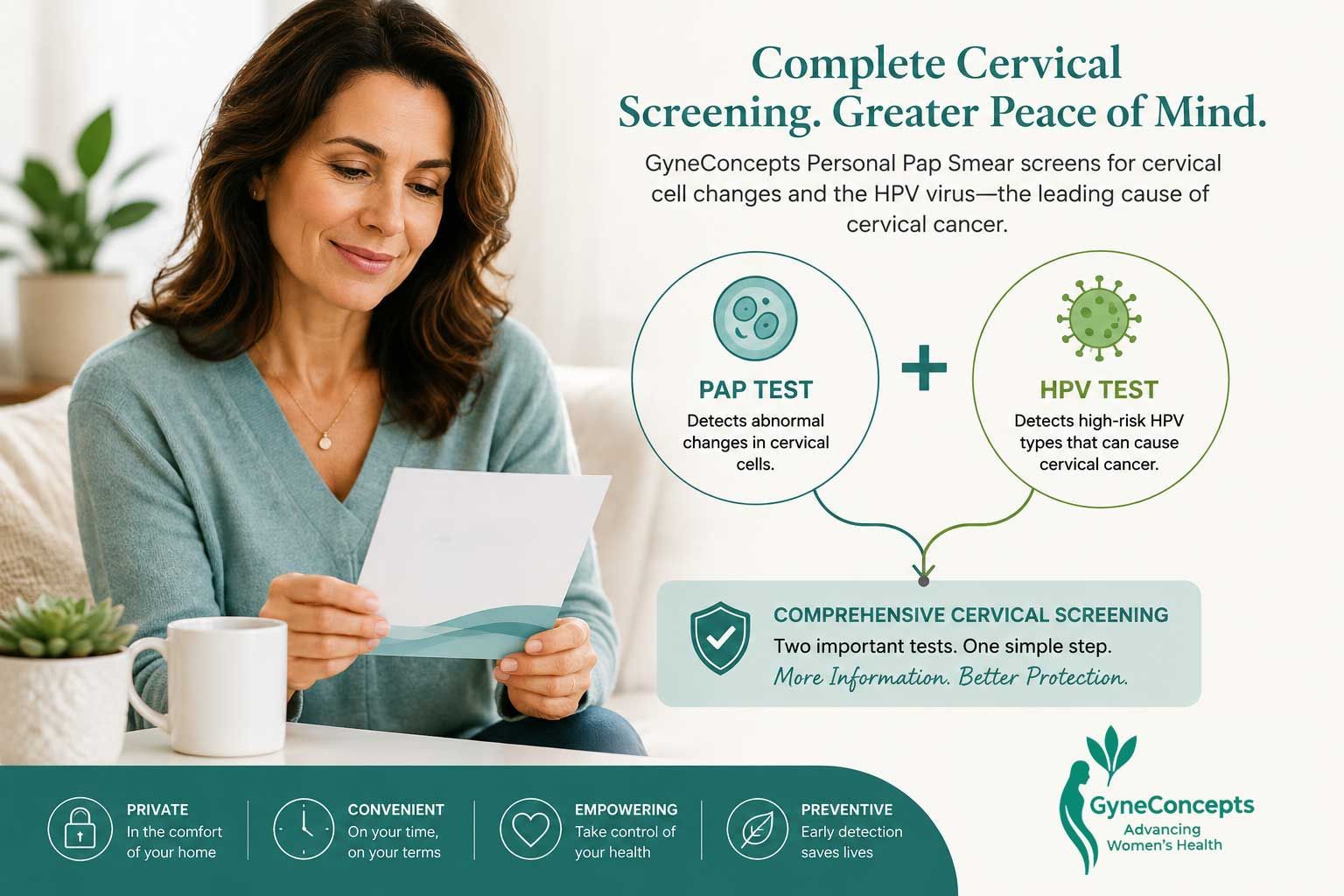
What Is a Co-Test?
A co-test combines both: Pap Smear and HPV Testing this approach allows healthcare providers to evaluate: Cervical cell abnormalities HPV status at the same time.
Traditionally, co-testing requires cervical cells to be collected by a clinician using a speculum and collection brush during an office visit.
However, advances in cervical cell collection technology continue to create new possibilities for screening participation.
The Personal Pap Smear cervical sample can be tested for HPV and Cervical Cancer which will reduce the need for two separate samples for analysis.
Why Cervical Cell Collection Matters
One of the most important distinctions in cervical cancer screening is where the sample is collected. Many self-sampling methods available today collect vaginal cells primarily for HPV testing. The Personal Pap Smear™ (PPS) was designed differently.
The PPS Collects Cervical Cells
The Personal Pap Smear™ (PPS) is specifically designed to collect cervical cells directly. These cervical cell samples tested by the lab may be analyzed for:
Cervical Cancer
Cervical Dysplasia
Malignant Cells
Chlamydia
Human papillomavirus (HPV)
Gonorrhea
Herpes Simplex Virus (HSV)
Yeast Infection
**And other Vaginal Cervical Conditions**
This approach supports broader testing possibilities while maintaining the convenience of self-collection.
Collect Once. Discover More
By collecting cervical cells, the PPS provides a unique approach to self-administered screening that differs from many currently available self-sampling methods.
Comparing Screening Methods
Pap Smear
Primary Focus
Detecting abnormal cervical cells.
What It Evaluates
Cell structure, Cellular abnormalities, Precancerous changes, Potential cancer development
Sample Source
Cervical cells.
Primary HPV Testing
Primary Focus
Detecting high-risk HPV infection.
What It Evaluates
Presence of high-risk HPV strains, Future cervical cancer risk indicators
Sample Source
HPV-containing cells.
Co-Testing
Primary Focus
Evaluating both HPV status and cervical cell abnormalities
What It Evaluates
Cervical cells, HPV infection status
Sample Source
Cervical cells.
Which Screening Method Is Right for You?
Every woman is different. The most appropriate screening approach depends on factors such as: Age, Medical history, Previous screening results, HPV status, Individual risk factors.
Women should always consult their healthcare provider regarding screening recommendations and the most appropriate testing strategy for their personal circumstances.
Designed Around Women's Needs
The PPS was created to provide:
- Greater privacy
- More convenience
- Flexible scheduling
- Increased accessibility
- Self-administered cervical cell collection
Women can use the device in the privacy of their home or within a healthcare setting, helping make screening more approachable for those who may otherwise delay testing.
Knowledge Leads to Better Health Decisions
The future of cervical health screening is not about choosing one method over another. It is about giving women access to options that encourage participation, support early detection, and fit their individual needs. At GyneConcepts, we are committed to advancing cervical health innovation through research, education, and patient-centered technology. Because when more women participate in screening, more lives can be protected through early detection.